Empowering Women: Strength Training After 40

Updated: Mar 13
As women age, their bodies undergo significant changes that can impact their physical health and overall well-being. One of the most effective ways to combat these changes is through strength training. Contrary to common misconceptions, strength training is not just for bodybuilders or athletes; it is a vital component of a healthy lifestyle, especially for women over 40. This blog post will explore the benefits of strength training, how to get started, and tips for maintaining a consistent routine.

The Importance of Strength Training for Women Over 40
Understanding the Changes
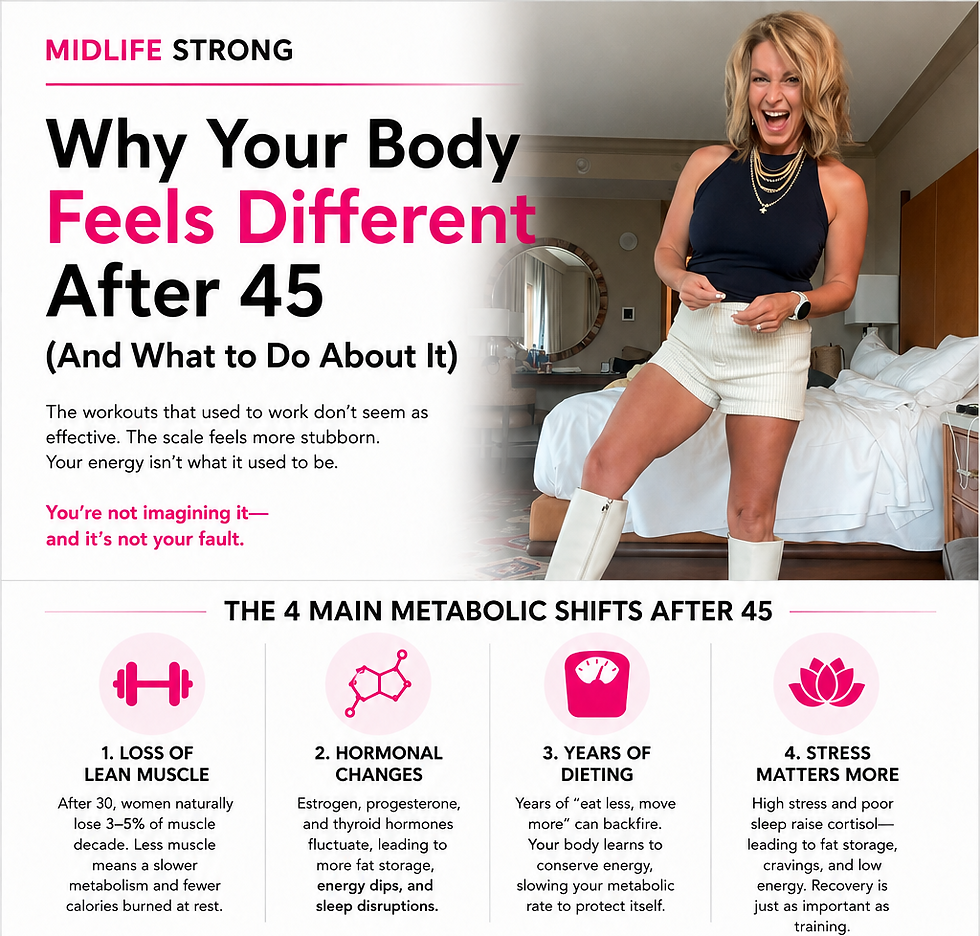
As women reach their 40s and beyond, they may experience a decline in muscle mass and bone density due to hormonal changes, particularly the decrease in estrogen levels. This can lead to:
Increased risk of osteoporosis: A condition that weakens bones and makes them more susceptible to fractures.
Weight gain: Slower metabolism can make it easier to gain weight, particularly around the abdomen.
Loss of strength and endurance: Everyday activities may become more challenging.
Benefits of Strength Training
Engaging in strength training can provide numerous benefits that counteract these age-related changes:
Increased Muscle Mass: Strength training helps build and maintain muscle mass, which naturally declines with age.
Improved Bone Density: Lifting weights can stimulate bone growth and reduce the risk of osteoporosis.
Enhanced Metabolism: Muscle tissue burns more calories at rest than fat tissue, helping to manage weight.
Better Balance and Coordination: Strength training improves stability, reducing the risk of falls and injuries.
Boosted Mental Health: Exercise releases endorphins, which can enhance mood and reduce symptoms of anxiety and depression.
Getting Started with Strength Training
Assessing Your Fitness Level
Before starting any new exercise program, it’s essential to assess your current fitness level. Consider the following:
Consult a healthcare professional: Especially if you have pre-existing health conditions or concerns.
Evaluate your current activity level: Are you a beginner, or do you have some experience with exercise?
Setting Realistic Goals
Establishing clear, achievable goals can help keep you motivated. Consider goals such as:
Improving overall strength: Aim to lift a certain weight or complete a specific number of repetitions.
Enhancing endurance: Focus on increasing the number of sets or duration of your workouts.
Losing weight: Combine strength training with cardiovascular exercises for optimal results.
Choosing the Right Equipment
You don’t need a gym membership to start strength training. Here are some options:
Free weights: Dumbbells and kettlebells are versatile and can be used for various exercises.
Resistance bands: These are portable and can provide varying levels of resistance.
Bodyweight exercises: Push-ups, squats, and lunges can be effective without any equipment.
Creating a Strength Training Routine
Frequency and Duration
Aim for at least two to three strength training sessions per week, allowing for rest days in between to let your muscles recover. Each session can last anywhere from 30 to 60 minutes.
Sample Workout Plan
Here’s a simple strength training routine to get you started:
Day 1: Upper Body
Push-ups: 3 sets of 8-12 reps
Dumbbell shoulder press: 3 sets of 8-12 reps
Bent-over rows: 3 sets of 8-12 reps
Day 2: Lower Body
Squats: 3 sets of 10-15 reps
Lunges: 3 sets of 10-15 reps (each leg)
Glute bridges: 3 sets of 10-15 reps
Day 3: Full Body
Deadlifts: 3 sets of 8-12 reps
Plank: Hold for 30-60 seconds
Mountain climbers: 3 sets of 30 seconds
Listening to Your Body
As you begin your strength training journey, it’s crucial to listen to your body. If you experience pain (not to be confused with the normal discomfort of working out), stop and reassess your technique or consult a professional.
Overcoming Common Barriers
Time Constraints
Many women feel they don’t have enough time to commit to a workout routine. Here are some tips to overcome this barrier:
Schedule workouts: Treat them like appointments that cannot be missed.
Incorporate short sessions: Even 15-20 minutes of strength training can be effective.
Lack of Motivation
Staying motivated can be challenging. Consider these strategies:
Find a workout buddy: Exercising with a friend can make workouts more enjoyable.
Track your progress: Keeping a journal of your workouts can help you see improvements over time.
Fear of Injury
It’s natural to be concerned about injury, especially when starting a new exercise program. To minimize risk:
Focus on form: Proper technique is essential for preventing injuries.
Start with lighter weights: Gradually increase the weight as you become more comfortable.
Nutrition and Recovery
Fueling Your Body
Nutrition plays a vital role in supporting your strength training efforts. Consider these tips:
Protein intake: Aim for a balanced diet that includes adequate protein to support muscle repair and growth. Sources include lean meats, fish, eggs, beans, and legumes.
Hydration: Drink plenty of water before, during, and after workouts to stay hydrated.
Importance of Recovery
Allowing your body to recover is just as important as the workouts themselves. Incorporate rest days and consider practices such as:
Stretching: Helps improve flexibility and reduce muscle soreness.
Sleep: Aim for 7-9 hours of quality sleep each night to support recovery.
Staying Consistent
Building a Routine
Consistency is key to seeing results. Here are some tips to help you stay on track:
Set reminders: Use your phone or calendar to remind you of your workout times.
Mix it up: Keep your routine fresh by trying new exercises or classes.
Celebrating Milestones
Recognizing your achievements, no matter how small, can boost your motivation. Celebrate milestones such as:
Completing a certain number of workouts.
Lifting heavier weights.
Feeling stronger and more energetic.
Conclusion
Strength training after 40 is not just beneficial; it is essential for maintaining health, strength, and vitality as you age. By understanding the importance of strength training, setting realistic goals, and creating a consistent routine, you can empower yourself to lead a healthier, more active life. Remember, it’s never too late to start. Take that first step today, and embrace the strength within you!


Comments